Research focus
Why do some individuals age better than others? Our research group focuses on characterising the neurobiological and psychosocial factors that support cognitive preservation in later life. We study how structural changes in the brain occur with ageing, and how lifestyle factors such as physical activity can influence these processes. By combining longitudinal cohort data with advanced MRI techniques, we aim to better understand the biological and behavioural mechanisms that contribute to individual differences in brain ageing.
A central vision of the group is to identify and optimise intervention strategies that can promote healthy brain ageing in older adults. Understanding which factors promote healthy brain ageing – and the mechanisms by which they do so – is a crucial step for the development of tailored and effective healthy ageing interventions.
The group brings together complementary expertise spanning cognitive neuroscience, exercise physiology, brain imaging, and ageing research. We work in close collaboration with other groups at DRCMR (e.g., Neurofluids) and other institutes across Copenhagen (e.g., Institute of Sports Medicine Copenhagen). Our current projects reflect this interdisciplinary focus on brain health, ageing, and physical activity. The HINT study uses advanced MR spectroscopy to investigate dynamic changes in brain metabolites following exercise, providing new insight into how physical activity acutely influences brain physiology. In the Brain Fluid Mobility study, we examine how cerebrospinal fluid mobility relates to cognitive preservation in ageing, and whether these processes can be modulated through physical activity. In the LISA study, we investigate long-term trajectories of brain structure in relation to physical function and lifestyle factors.
We are always looking for talented, enthusiastic and motivated group members, so if you have an interest in interventions and lifespan brain imaging, do not hesitate to contact us.
Key projects
Live Active Successful Aging (LISA) Study
The LISA study consisted of a randomised controlled trial (RCT) to test the effects of physical activity programme on the physical function, well-being, and brain health of older adults. Participants (n = 451) were randomised to a 12-month intervention of: (a) heavy resistance training, (b) moderate intensity training or (c) a control programme. In the 7-years since the end of the intervention, participants have repeatedly completed assessments of cognitive and physical health, as well as brain MR scans – creating a unique and rich longitudinal dataset.
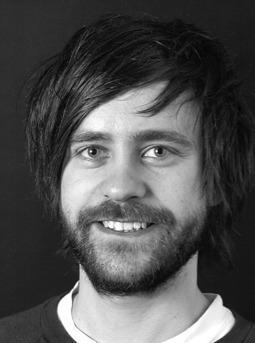
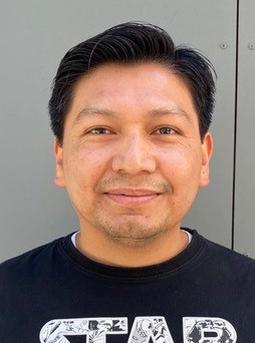
People: Sussi Larsen, Hartwig Siebner, Henrik Lundell, Enedino Hernandez, Eline Baad-Hansen
Funding: Nordea Foundation
Brain Fluid Mobility in Ageing: Mechanisms and modulation of cognitive preservation
Cerebrospinal fluid (CSF) plays a role in clearing metabolic waste from the brain, yet its contribution to cognitive ageing remains poorly understood. This project uses a novel, non-invasive 7T MRI sequence (CSF-STREAM) to quantify CSF-mobility in older adults and examine its relationship with cognitive function. Leveraging a uniquely well-characterised ageing cohort (the LISA study), we will identify blood biomarkers, lifestyle factors, and brain features that predict CSF dynamics in late life. Finally, we will test whether a 3-month aerobic exercise intervention can enhance CSF-mobility and improve cognition in older adults. Ultimately, we aim to determine whether brain fluid dynamics are a modifiable mechanism of cognitive preservation, providing new insight into how lifestyle interventions like exercise can protect brain health in ageing.
People: Kristian Mortensen, Hartwig Siebner
Funding: Lundbeck Foundation Fellowship
HIT-ing the neurometabolic targets for exercise-induced effects on cognition (HINT)
Using 7T magnetic resonance spectroscopy (MRS), the HINT study tested the effects of a single bout of exercise on brain metabolite concentrations and cognitive function in older adults. More specifically, we tested the hypotheses that: (1) a single session of exercise can modulate brain metabolites and improve accuracy in a working memory task, and (2) changes in the working memory outcome are associated with changes in brain metabolites following exercise.
People: Hartwig Siebner, Alena Svatkova, Petr Bednarik
Funding: Lundbeck Foundation Postdoctoral grant & Lundbeck Foundation Investigator Network Seed grant
Datasets
Lifebrain
The LISA study is part of Lifebrain (Healthy minds from 0-100 years: Optimising the use of European brain imaging cohorts), a European consortium coordinated by the University of Oslo, consisting of 14 partners (https://www.drcmr.dk/lifebrain). Lifebrain was initiated in 2017 and aims (a) to establish a solid foundation of knowledge for understanding how brain, cognitive and mental health can be optimized through the lifespan and (b) to identify determinants of brain, cognitive and mental health at different stages of life by creating a large database of detailed information about brain imaging relating to cognitive function, mental health, and genetics. Lifebrain incorporates more than 5000 individual participants and exceeds 27.000 examinations in total.
Selected Publications
Gonzalez-Gomez, R., Demnitz, N., Coronel, C., Gates, A. T., Kjaer, M., Siebner, H. R., Boraxbekk, C-J. & Ibanez, A. M. (2026). Randomized controlled trial of resistance exercise and brain aging clocks. GeroScience, 1-12.
Demnitz, N., Baaré, W. F. C., Binnewies, J., Brandmaier, A. M., Fjell, A. M., Gates, A. T., Kievit, R., Kjaer, M., Madsen, K. S., Nyberg, L., Pudas, S., Siebner, H. R., Suri, S., Sørensen, Ø., Walhovd, K. B., Ebmeier, K. P. & Boraxbekk, C-J. (2025). No significant association between self-reported physical activity and brain volumes in women and men from five European cohorts. Scientific Reports, 15(1), 1-9.
Bloch-Ibenfeldt, M., Demnitz, N., Gates, A. T., Garde, E., Siebner, H. R., Kjaer, M. & Boraxbekk, C-J. (2025). No long-term benefits from resistance training on brain grey matter volumes in active older adults at retirement age. BMC Geriatrics, 25, 120.
Roe, J. M., Vidal-Piñeiro, D., Sørensen, Ø., Grydeland, H., Leonardsen, E. H., Iakunchykova, O., Pan, M., Mowinckel, A., Strømstad, M., Nawijn, L., Milaneschi, Y., Andersson, M., Pudas, S., Bråthen, A. C. S., Kransberg, J., Falch, E. S., Øverbye, K., Kievit, R. A., Ebmeier, K. P., Lindenberger, U., Ghisletta, P., Demnitz, N., … & Wang, Y. (2024). Brain change trajectories in healthy adults correlate with Alzheimer’s related genetic variation and memory decline across life. Nature Communications, 15(1), 10651.
Demnitz, N., Hulme, O. J., Siebner, H. R., Kjaer, M., Ebmeier, K. P., Boraxbekk, C. J., & Gillan, C. M. (2023). Characterising the covariance pattern between lifestyle factors and structural brain measures: a multivariable replication study of two independent ageing cohorts. Neurobiology of Aging, 131, 115-123.
Demnitz, N., Gates, A. T., Mortensen, E. L., Garde, E., Wimmelmann, C. L., Siebner, H. R., … & Boraxbekk, C. J. (2023). Is it all in the baseline? Trajectories of chair stand performance over 4 years and their association with grey matter structure in older adults. Human Brain Mapping, 44(11), 4299-4309.
De Looze, C., Demnitz, N., Knight, S., Carey, D., Meaney, J., Kenny, R. A., & McCrory, C. (2023). Examining the Impact of Socioeconomic Position Across the Life Course on Cognitive Function and Brain Structure in Healthy Aging. The Journals of Gerontology: Series A, 78(6), 890-901.
Nyberg, L., Andersson, M., Lundquist, A., Baaré, W. F., Bartrés-Faz, D., Bertram, L., Boraxbekk., C-J., Brandmaier, A. M., Demnitz, N., … & Walhovd, K. B. (2023). Individual differences in brain aging: heterogeneity in cortico-hippocampal but not caudate atrophy rates. Cerebral Cortex, 33(9), 5075-5081.
Demnitz, N., Stathi, A., Withall, J., Stainer, C., Seager, P., De Koning, J., … & Sexton, C. E. (2022). Hippocampal maintenance after a 12-month physical activity intervention in older adults: the REACT MRI study. NeuroImage: Clinical, 102762.
Stathi, A., Greaves, C. J., Thompson, J. L., Withall, J., Ladlow, P., Taylor, G., Medina-Lara, A., Snowsill, T., Gray, S., Green, C., Johansen-Berg, H., Sexton, S.E., Bilzon, J.L., de Koning J., Bollen, J., Moorlock, S., Western, M., Demnitz, N., Seager, P., Guralnik, J., … & Fox, K. R. (2022). Effect of a physical activity and behaviour maintenance programme on functional mobility decline in older adults: the REACT (Retirement in Action) randomised controlled trial. The Lancet Public Health, 7(4), e316-e326.